Course Outline
Overview
- Cohesion in Systems and Components
- Dependencies among Systems and Components
- Software Architecture Principles
- Technical Architecture Structures
- Enterprise Architecture Strategies
- SOA and Microservices Architectures
- Interconnections between these concepts
- Logic Redundancy versus Dependency
- Data Redundancy versus Dependency
Software Architecture
Foundations
- Defining Key Terms: Architecture, Design, Modeling
- Concept of Orthogonality
- Conway's Law
Standard Architectural Styles
- Modular Decomposition
- Hierarchical Architecture
- Centralized Models (Mediator Pattern)
- Event-Driven Architecture
- Interrupt-Based Systems
- OSI Model
- Client-Server Architecture
- Layered Models
Object-Oriented Design Principles
- DRY and SRP Principles
- Encapsulation
- Programming to Interfaces
- Liskov Substitution Principle
- Law of Demeter
Design Patterns
- Introduction to Design Patterns
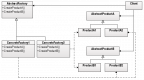
- Creational Patterns
- Structural Patterns
- Behavioral Patterns
- Model-Controller-View (MCV)
Design Tools
- Domain-Specific Languages
- Lexical Analysis
- CRC Cards
- Scenario Modeling
- Use Case Descriptions
UML Diagrams
- Class Diagrams
- Sequence Diagrams
- Aggregation Diagrams
- UML Toolkits
Non-UML Visualization
- ER Modeling
- State Machines
- Data Flow Diagrams
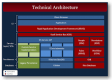
- Architectural Models
Design and Maintenance
- Lehmann's Laws
- Architectural Anti-Patterns
- Refactoring Strategies
SOA and Integration Patterns
- Integration Technologies and Methods
- Synchronous vs. Asynchronous Communication
- Advanced Direct Communication Patterns
- Direct and Brokered Communication
- Message Queuing
- Enterprise Service Bus (ESB)
Deployment Patterns
- Code Deployment Strategies
- Immutable Deployment
- Availability, Scalability, High Performance, and Fault Tolerance
- Data and Message Replication/Clustering (CAP Theorem)
Testimonials (7)
Trainer knowledge, involvement, and rapport
Adam Kuklewski - GE Medical Systems Polska
Course - Technical Architecture and Patterns
It describe MODERN solutions with REAL examples
Catalin - Siemens S.R.L.
Course - Technical Architecture and Patterns
How well thought the training is, taking you from the first steps that needs to be accomplished as an architect, towards making sure that the final solution will meet all the required quality standards, informing you on the way of the importance of each and every aspect. Besides that, it makes you aware not only of the technical aspects of architecture, but also on the business ones, making you aware that as an architect, your job is not only to engineer great solutions, but it is also to bring value and build upon the strategic vision of the company. Philippe is an awesome trainer, very professional, with lots of experience, great communication and soft skills, which are also mandatory as well for someone willing to take such an architecture role. Last but not least, I appreciated very much that Philippe provided the full course content as a pdf file - now I have a solid base to continue my learning journey - thanks again for this!
Alex R. - Siemens S.R.L.
Course - Technical Architecture and Patterns
It would have been better if it was for a whole week
Marius - Siemens S.R.L.
Course - Technical Architecture and Patterns
Trainer capability to listen and understand my case/issue/problem...
Francois - TE
Course - Technical Architecture and Patterns
The trainer engagement and passion about the subject
Khalid Alqahtani - General Organization for Social Insurance
Course - Technical Architecture and Patterns
The topic is a trend today